

 Our mission is to lead innovation by providing the most advanced solutions in reliability and sustainability to empower…
 REC is looking to the future by aligning business goals with Saudi Arabia’s 2030 Vision. Part of this is investing in our young people and their future.
 Reliability Expert Center was established with the strategic vision of spreading a reliability and sustainability culture across Saudi Arabia.



Download Example File for Version 10 (*.rsgz10) or Version 9 (*.rsr9)
This example demonstrates how to perform a risk based inspection analysis using the RBI software.
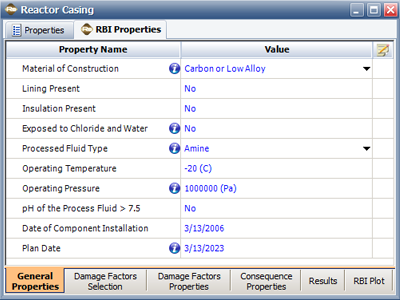
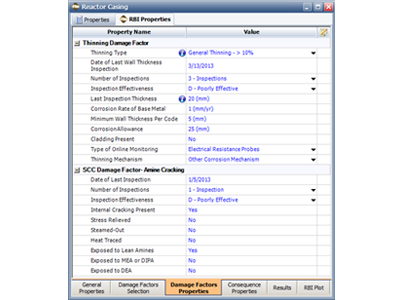
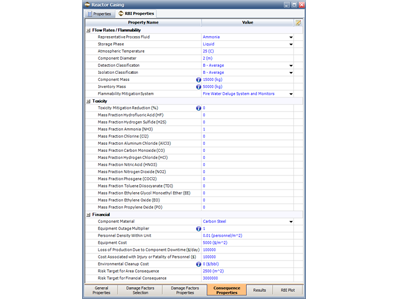
For this example, you will be analyzing a reactor casing that was installed on March 13, 2006 with a planned replacement date of March 13, 2023. The reactor is subject to general thinning corrosion and possible amine cracking. On average, the reactor contains 15 tons of liquid ammonia with the upstream connected equipment containing another 35 tons of liquid ammonia. Management estimates that the loss of production due to reactor downtime is $100,000 per day. The acceptable safety risk is 2,500m2 and the acceptable financial risk is $3 million. You must determine if the reactor requires any further inspections before the planned replacement date.
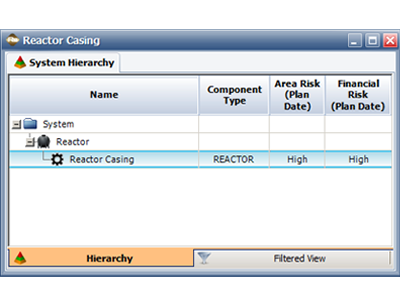
Step 1: Create the system hierarchy.

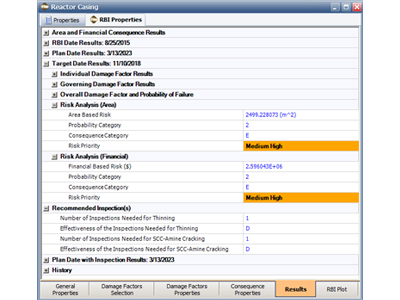
The following plot shows these dates graphically.
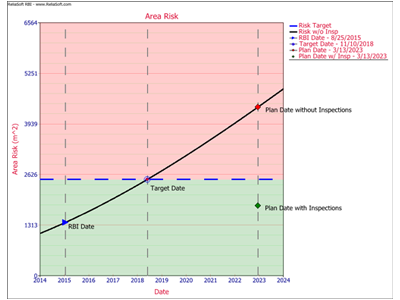
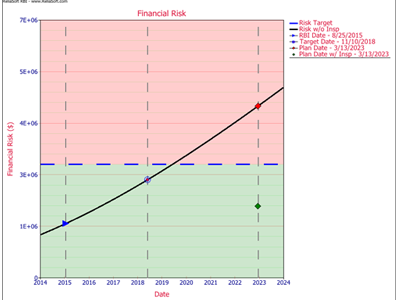
Based on the analysis the reactor will require additional inspections before the planned replacement date, but as long as they are at least poorly effective, and nothing out of the ordinary is found, then the area and financial risks will likely remain within the limits determined by the management.